
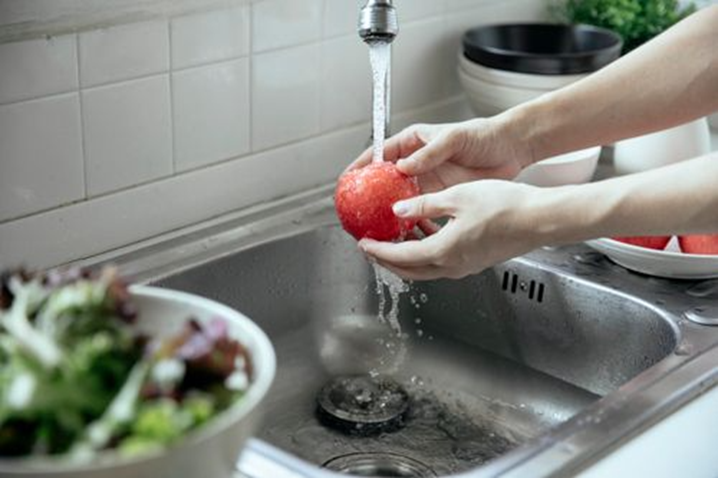
Turn on the faucet and the water looks clear, smells fine, and tastes about the way you expect it to. But “clear” and “clean” are not the same thing. Even water that meets federal safety standards can carry a long list of dissolved chemicals, microscopic particles, and minerals you can’t see or taste.
If you’ve ever wondered exactly what contaminants are in tap water, and what you can actually do about them, this guide breaks down the most common culprits and explains how a whole home water filtration system addresses them at the source.
Where Tap Water Contaminants Come From
Your water travels a long way before it reaches your home. It’s pulled from rivers, reservoirs, or underground aquifers, treated at a municipal plant, and then pushed through miles of public and private pipes. Each stage introduces the possibility of contamination.
Municipal utilities add disinfectants to kill bacteria, but those same chemicals leave a residue. Aging infrastructure can leach metals into the supply. Agricultural and industrial runoff seeps into source water. And if you rely on a private well, your water skips municipal treatment entirely, leaving sediment, bacteria, and dissolved minerals to flow straight into your plumbing. The result is that almost no household receives truly pure water, only water that has been treated to an acceptable baseline.
Common Contaminants Found in Tap Water
Here are the categories most likely to show up in a typical home’s water supply.
Chlorine and Chloramine
Public water systems use chlorine or chloramine to disinfect water and prevent the growth of harmful bacteria. While effective, these chemicals are responsible for the “pool water” smell and flat taste many people notice at the tap. Chlorine can also dry out skin and hair during bathing.
Sediment and Turbidity
Sand, silt, rust, and other fine particles cloud your water and give it a gritty quality. Sediment is especially common in well water and in homes served by older pipes. Beyond the cloudiness, these particles can clog fixtures, stain laundry, and wear down appliances over time.
Lead and Heavy Metals
Lead rarely originates at the treatment plant—it enters through corroded service lines, older solder, and brass fixtures. Other heavy metals such as copper, mercury, and arsenic can also appear depending on your local geology and plumbing. Because lead has no safe level of exposure, this is one of the most important contaminants to filter, particularly in homes with young children.
PFAS (“Forever Chemicals”)
Per- and polyfluoroalkyl substances are synthetic compounds used in nonstick coatings, firefighting foam, and water-resistant products. They’ve earned the nickname “forever chemicals” because they don’t break down naturally and can persist in water supplies for decades. PFAS contamination has become a growing national concern, and regulators have moved to tighten limits on them in drinking water.
Disinfection Byproducts
When chlorine reacts with naturally occurring organic matter in water, it forms byproducts such as trihalomethanes (THMs) and haloacetic acids. These form during the treatment process itself, meaning the very step that makes water safe to drink can introduce a new class of contaminant.
Pesticides, Herbicides, and VOCs
Volatile organic compounds, along with agricultural pesticides and herbicides, can migrate into both surface water and groundwater. These chemicals are often odorless and tasteless, which makes them impossible to detect without testing—and easy to overlook.
Bacteria, Viruses, and Microorganisms
Microbial contamination is a particular risk for well owners and anyone on a private or aging system. Bacteria, viruses, cysts, and other pathogens can cause illness and are not reliably removed by standard sediment or carbon filtration alone, which is why ultraviolet (UV) treatment matters.
Nitrates
Common in rural and agricultural areas, nitrates seep into groundwater from fertilizer and animal waste. They’re a specific concern for infants and pregnant women and, like many contaminants, give no warning through taste or smell.
Hardness Minerals
Calcium and magnesium aren’t harmful to drink, but in high concentrations they create “hard water” that leaves scale on fixtures, spots on dishes, and buildup inside pipes and appliances. Over time, scale shortens the lifespan of water heaters, dishwashers, and washing machines.
Why a Whole Home Water Filter Is the Right Solution
Pitcher filters and faucet attachments, while helpful, only clean the water at a single tap. That leaves every other point of contact: your shower, your laundry, your ice maker, your bathroom sinks, all running unfiltered water. A whole home water filtration system treats water where it enters your house, so every faucet, fixture, and appliance receives the same protected supply.
This point-of-entry approach delivers benefits a single-point filter can’t match: cleaner water for drinking and cooking, gentler water for skin and hair, less scale on plumbing and appliances, and the removal of contaminants you’d otherwise be bathing in. It’s a single, low-maintenance system that protects the whole household at once.
How Nature’s Air & Water Whole Home Systems Address These Contaminants
We build our whole home systems around multi-stage filtration (and, in select systems, UV sanitation) to target the full range of contaminants described above. Multiple filtration stages mean each layer handles a different problem: sediment is captured first, then chemicals, chlorine, and odors are reduced, improving the clarity, taste, and chemistry of your water.
The whole home lineup is designed to match different household needs:
- PureHome 2-Stage and PureHome Max 3-Stage systems use sequential filtration to remove sediment and reduce chemical contaminants, chlorine taste, and odors for the entire home.
- PureHome Ultra and PureHome Ultra Max systems add UV purification, which neutralizes bacteria, viruses, and other microorganisms without adding any chemicals, ideal where biological contamination is a concern.
- The PureHome Well spin-down sediment pre-filter is built for well owners, capturing sand, silt, and grit before it reaches the rest of your filtration setup or your plumbing.
Select systems also reduce the hardness minerals responsible for scale, helping extend the life of your pipes and appliances. Together, our range covers everything from municipal chlorine and sediment to well-water microbes and hard-water buildup.
Find Out What’s Actually in Your Water
Because so many contaminants are invisible and tasteless, guessing is never a good strategy. The smartest first step is understanding your specific water supply. We offer a quick Water Quality Test quiz to help you identify your likely concerns and match them to the right system.
Clean water shouldn’t be something you hope for, it should be something you can count on at every tap. Explore our full range of whole home water filtration systems and take control of what flows through your home. If you have questions about specifications or which system fits your household, get in touch with our team.